Fabric and Color Mistakes We See in Shelbyville Homes
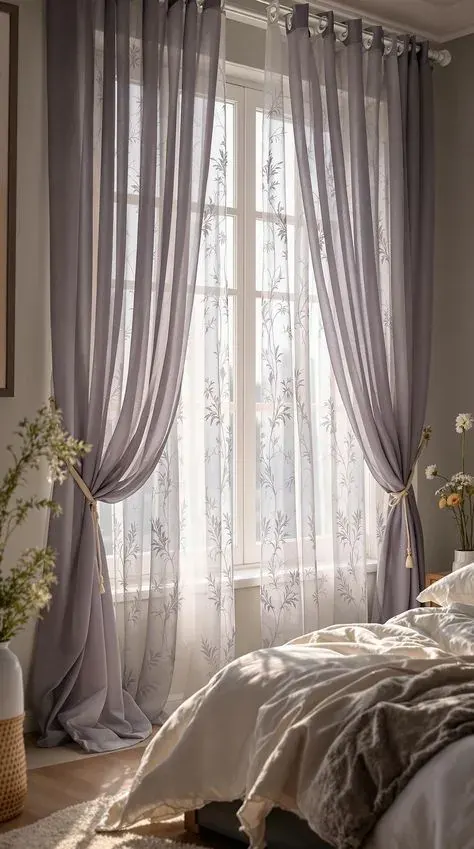
Custom drapery is not cheap, and a fabric or color mistake is expensive to live with once panels are sewn and hemmed to a specific window. A short list of questions before you order saves most of that regret, and none of them require any special expertise to ask.
Fabric Weight and How Drapery Falls
The mistake we see most often is ordering a lightweight fabric for a window that gets opened and closed by hand every day. Light fabric snags on rough hardware, and it shows finger oil and wear at the leading edge within a year in a way heavier weaves don't. If a panel is going to get handled daily rather than left open, weight and weave tightness matter more than the swatch color.
Another problem shows up on wide windows. A single width of lightweight fabric on a window wider than about four feet can look skimpy no matter how much fullness you order, because thin fabric doesn't hold a fold, it just falls flat between the pleats. That's a case where either doubling up on fullness or moving to a heavier weight fixes it.
We've also seen fabric ordered without checking how it performs once it's actually hung. A swatch lying flat on a table tells you almost nothing about drape. Ask to see a full hank, at least a yard, held up vertically, before committing a whole Shelbyville window to it.
Pattern and Texture
Look at what's already patterned in the room before adding more pattern at the window. A room with a patterned rug and patterned upholstery generally needs a solid or textured drapery, otherwise everything competes for attention and the room feels busy rather than layered. A mostly neutral room, on the other hand, has room for the window to be the pattern statement.
Scale should relate to the size of the window and the room, not just personal preference. A tight, repeating small print can look almost like a solid from across the room, which works well in a smaller Shelbyville bedroom where a huge bold pattern would feel like too much. A great room with high ceilings and a big expanse of glass can carry a much larger scale print without it feeling overdone.
Texture is worth leaning on in rooms that already have a lot of hard, smooth surfaces, tile floors and large expanses of glass, for instance. A slubby linen or a nubby weave softens a room like that in a way a flat, smooth solid fabric doesn't.
Color and Sun Exposure
Dark, saturated colors, think navy, hunter green, rust, or a deep charcoal, tend to show two things a lot of people don't expect: dust and fading. Dust shows up as a dull haze on dark fabric that's much more visible than it would be on a mid-tone, and fading on a dark color often shows as an uneven patch rather than an overall lightening, especially where direct sun hits one section of the panel more than another.
Pale, soft colors have the opposite problem. They show soiling at the leading edge and along the bottom hem, where hands and floors touch the fabric, faster than a mid-tone would. Neither issue is really about color itself, it's about how visible normal wear is against that particular shade.
For a Shelbyville window with strong afternoon exposure, a mid-tone with some texture in the weave hides both problems better than a flat, dark solid or a very pale one. And regardless of the shade you land on, understand that sun exposure gets slowed with lining and UV-resistant fiber, never stopped outright.
Light Control and Lining Options
Ask what the lining is actually made of, not just whether it's labeled blackout. Some blackout linings use a foam layer bonded to fabric, which blocks light well but can crack and flake after years of folding and sun exposure. Others use a tightly woven black or gray yarn instead of foam, which tends to hold up longer and drapes a little softer.
Ask how many passes the blackout lining has, meaning how many coating layers were applied. A three-pass lining blocks more light than a one-pass, but it's also stiffer and heavier, which changes how the panel folds when it's pulled open.
And ask whether the lining is detachable or permanently sewn to the face fabric. Detachable linings can be cleaned separately and swapped out if they wear before the outer fabric does, which matters over the long life a lot of Shelbyville drapery ends up having. A sewn-in lining is cheaper up front but you're stuck replacing the whole panel if just the lining fails.
Fullness and the Hardware Behind It
Fullness is the ratio of fabric width to rod width, and it's the biggest reason two panels made from the same fabric can look completely different once hung. A pleated panel at standard fullness, roughly two to two and a half times the rod width, falls in defined, even folds. Cut that ratio down to save fabric and the panel looks flat and skimpy no matter how nice the fabric is.
Heading style changes how much fullness you actually need. A grommet panel typically wants less fullness than a pinch pleat to look right, because the grommets themselves create even waves. A ripplefold panel, riding on a track with evenly spaced carriers, often needs the least fullness of all because the wave spacing does most of the visual work.
None of that matters if the hardware underneath can't carry the load. A wide Shelbyville window with a heavy, fully lined panel needs a rod rated for that weight, ideally with center support if the span runs past six feet, or the rod will bow and the panels won't glide evenly.
There is no substitute for asking these questions out loud with someone who installs drapery for a living. A free in-home measure at your Shelbyville address is a practical place to start, whether you already have a fabric picked out or you are still narrowing things down.
Frequently Asked Questions
What is the difference between blackout lining and regular lining?
Regular lining, usually a cotton sateen, adds body and cuts down glare without blocking much light. Blackout lining has a foam-coated or tightly woven layer bonded to it that blocks nearly all direct light through the fabric itself, though some light still leaks around the edges and top of the panel since drapery is not a sealed system the way a shade in a track is.
Why did my curtain color look different once it was installed?
Almost always it is the lighting. Showroom fluorescent lighting and a home's actual daylight render color very differently, and a swatch that looked warm and creamy in the store can look cooler or flatter once it is hanging in a room with different light exposure. Testing a sample against the real window at different times of day avoids most of this surprise.
Is a more expensive fabric always the better choice?
Not automatically. Price often reflects fiber content and how the fabric was dyed, both of which affect drape and how long color holds, but a well-chosen mid-range fabric at the right fullness and with good lining can outperform an expensive fabric that is skimped on those details. Weight and construction usually matter more than the price tag alone.
 Why Standard Blinds Never Quite Fit a Sliding Glass Door
 Window Treatments for Tall and Oversized Windows in Shelbyville
 The Real Cost of Cheap Blinds in Shelbyville Rental Properties