Bamboo Shades

Bamboo Shades in and Around Shelbyville, IN

Tight bamboo weaves, with the light they pass measured honestly

Call (317) 999-5154Get Free Quote
Quick Answer

These questions cover how this product actually behaves in a house rather than in a photograph. Light, privacy, operation and durability all look different once something has been hanging through a full year.

  • Service: Bamboo Shades for Shelbyville homeowners
  • Service area: Shelbyville, IN and surrounding areas
  • We book measures without much delay. What you can't compress is the fabrication window, which runs two to five weeks depending on the product and the finish. Painted shutter finishes sit at the longer end.
  • Insured and bonded
  • Serving Shelbyville, IN since 2008
Bamboo Shades Services

Expert Bamboo Shades for Shelbyville Homes

Bamboo is the tightest and most uniform of the woven materials, which makes it the one that works where a loose reed weave would look accidental. That's the post-2000 half of Shelbyville. The 1,026 houses built between 2000 and 2009, and the 678 from 2010 to 2019, carry painted trim and plain rectangular openings, and a fine bamboo weave brings warmth to that without arguing with anything. It also suits the tall narrow openings on a West Side stair landing, where a long roll up panel follows a proportion modern stock sizes never match. Shelbyville has 2,152 houses predating 1940, and stair glass is a normal feature in them.

Every weave passes light, including the tight ones. Hold a bamboo panel against a window and you'll see daylight through the stalks, which is fine in a living room and useless in a bedroom. Real darkness means a liner sewn behind the weave, and that liner adds cost, adds bulk to every fold and raises the stack at the head. The other limit is that bamboo can't be recut. A panel is bound at its finished width, so on a Shelbyville ranch carrying 12 to 18 openings a wrong number at the measure means a new shade rather than an adjustment. Edge banding can also work loose over years of handling.

When to Call

Signs You Need Bamboo Shades

If you notice any of these in your Shelbyville home, it is worth booking a measure. None of it is urgent, and none of it fixes itself either.

White trim and white walls leave nothing to look at

A wide opening needs a seam nobody planned for

Bare windows look cold against wood floors

Store-bought matchstick shades have started to sag

A bedroom wants the weave and still has to go dark

Existing naturals were never lined and never worked

The stack shows above a valance that's too short

A screened porch reads unfinished

You can see straight in after dark

The weave over the tub has gone wavy

Our Process

How Shelbyville Window Treatments Handles Bamboo Shades

Every job follows the same five-step process. Transparent, thorough, and done right the first time.

1

Liner held behind the weave

2

Price and dates on paper

3

Custom build, two to five weeks

4

Headrail mounted and leveled

5

Blackout layering priced as an option

Real Project Photos

Bamboo Shades in Shelbyville

Photographs from real bamboo shades jobs completed by our crew in Shelbyville and surrounding areas.
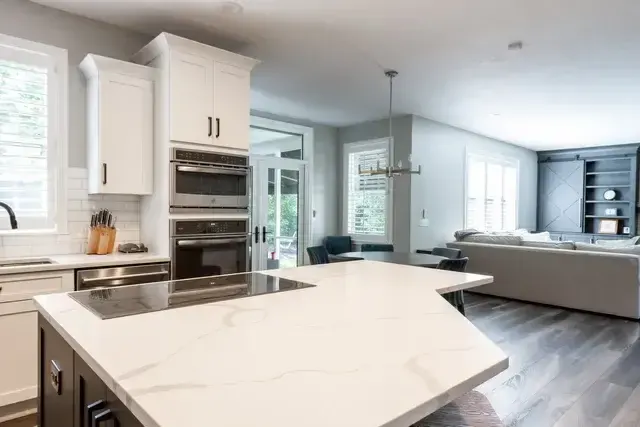
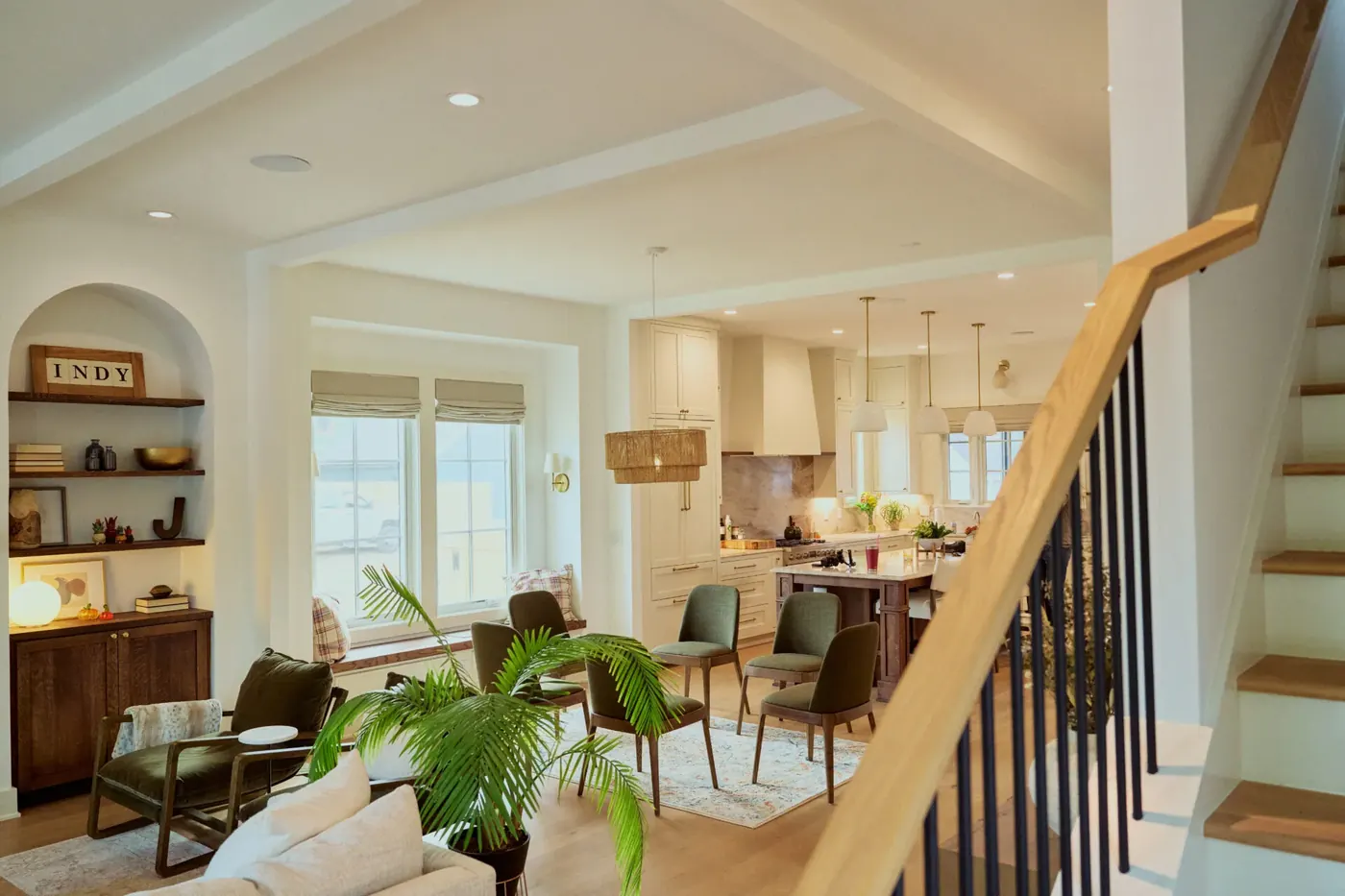
Custom shades measured and installed in ShelbyvillePlantation shutters fitted to a Shelbyville windowCellular shades in a Shelbyville living room
Scope of Work

What Bamboo Shades Includes

Every Shelbyville job is documented item by item. Here is what the crew covers.

The light question settled before anything else: every bamboo weave passes light, and the only cure is a liner

A sample held against your own glass in daylight so you can see exactly how much comes through the weave

Liner decided window by window and written on the order, none, a privacy liner or a room darkening liner

The liner shown behind the weave before you commit, since it flattens the texture you are buying the shade for

Cane cut and weave chosen deliberately, from a coarse split cane to a fine matchstick

Color read as a natural range rather than a single value, because bamboo is a harvested material

Every shade for one room ordered together so the material comes off the same run

Stack depth figured on the actual weave, since bamboo bundles far deeper than a rolled fabric of the same drop

Where that stack lands checked against the glass, so you know what the shade covers when it is fully raised

Three widths and three heights taken per opening with a diagonal, because a natural weave shows an out-of-level hem plainly

Mounting depth measured for a headrail carrying bundled material rather than a flat roll

Edge banding specified wherever a cut edge would ravel or read unfinished against painted trim

Valance depth chosen so the headrail is genuinely covered instead of half shown

Lift matched to the finished weight, since a wide lined natural is heavier than people expect

Products specified to conform to ANSI/WCMA A100.1-2022 for cord access, with cordless in rooms children use

Openings inside shower spray or directly over a cooktop moved to a different product at the measure

A written agreement carrying the scope, the dates and the price, as IC 24-5-11 requires above $150 of residential work

Folds dressed by hand and the shade cycled on install day so the material learns to stack evenly

Pricing

What Bamboo Shades Cost in Shelbyville

Published national ranges run about $60 to $600 per window for stock shades and about $250 to $2,600 for custom-fabricated ones. Treat those as national category figures rather than a price for a room in Shelbyville. Bamboo covers a wide part of that band. A simple split cane on a small opening with no liner is inexpensive. The same weave with a room darkening liner, edge banding and a deep valance on a tall window is a different purchase, and the liner is the line item most people have not budgeted for when they walk in. Width and drop then do what they always do, and a lined natural on a wide opening carries real weight, which affects the lift we specify. Shelbyville Window Treatments prices from measured openings around Shelby County with the liner settled before the number is written.

By Product

How Bamboo Shades Differ by Product

Every product in this trade behaves differently in a room. Here is what that means for this work.

Split cane bamboo: Bamboo halved lengthwise and woven with string, which gives the strong horizontal line most people picture. The gaps between canes are where daylight and nighttime sightlines get through, and that gap is a design feature rather than a flaw.

Matchstick weave: Fine round sticks woven tight, so the face reads much smoother and finer than split cane. It packs closer, which holds back a bit more daylight on its own, and it suits a formal room where coarse texture would look out of place.

Carbonized bamboo: Bamboo darkened by heat treatment rather than by stain, which is why the color runs through the cane and looks deeper in person than in a photo. It reads warm against white trim and it varies naturally from piece to piece.

Bamboo with reed or grass: A mixed weave with bamboo carrying the structure and reed, jute or grass adding a finer secondary texture. It looks less uniform than a single-material weave, which is exactly the appeal, and it makes matching a later order harder.

Privacy liner: A light filtering liner sewn behind the weave, so the room stays bright and nobody sees in during the day. It's the liner most people actually want, and it changes the look from inside by muting the texture the weave provides.

Room darkening liner: A dense liner that takes a bedroom to genuinely dim. It's the only honest path to darkness in this product, and even then the edges of an inside mount still pass light, so a bedroom that must be dark needs an outside mount too.

Edge banding: A finished band applied along the cut edges of the weave. It stops a raw edge from raveling over the years and it gives the shade a deliberate outline against painted trim, which matters more on a coarse weave than a fine one.

Valance and decorative headrail cover: A band of the same material covering the headrail and the top of the stack. Without one you see hardware and the top of the bundle. Depth matters here, since a shallow valance on a deep stack hides half of what it should.

Cord loop with a tensioner: The control that handles weight best, which counts on a lined natural. The tensioner has to be fastened to the wall or the frame rather than left hanging, and we install it as part of the job rather than leaving it in the box.

Top-down bottom-up on a natural: Two rails so daylight can come over the top while the lower glass stays covered. On a heavy woven material it adds hardware and weight, so we check the finished size against the manufacturer's limits before writing it on the order.

Light Control

See What Each Fabric Does To The Light

Pick a fabric below and the window updates. It's a drawing rather than a photograph, so read it as a rough guide to what each family does in a Shelbyville room, and to what it doesn't do.

Fabric type

Sheer, 10 percent openness

Ten percent of the weave is open, so you keep the view and most of the daylight. Glare drops a little. After dark, once your lamps are on, someone outside can read shapes through it, which is why this belongs on a view window rather than a bedroom.

Openness factor is printed on the fabric card, so you can compare one line against another before you order anything.

Keeps the viewNot private after dark

Solar, 5 percent openness

The usual pick for a west window or a covered porch. You can still read the yard through it, glare comes down noticeably, and the fabric intercepts a good share of the sun before it reaches you at four in the afternoon.

It also cuts the UV landing on floors and furniture. NFRC puts UV at roughly 40 to 60 percent of fading damage, so this slows fading rather than stopping it.

View and glare controlSlows fading

Solar, 3 percent openness

A tighter weave. The room goes dimmer and the view drops back to an outline. Choose it where the sun is the problem and the view is second, which around here usually means a west wall in July. That's a common call on this side of Indianapolis.

Openness affects how much you see out, not how private you are. A 3 percent fabric still shows silhouettes at night.

View becomes an outlineStrong glare control

Solar, 1 percent openness

Close to a solid fabric with a little view left in it. This is the strongest glare control in the solar family.

The trade is that it darkens the room on a gray January day too. Indianapolis averages a January high near 36F and the light is flat, so think about how the room reads in both seasons before you commit.

Darkest solar optionDim on gray days

Light filtering

No view through it. Daylight comes through the face diffused, so the room stays bright without a hot spot across the television or the kitchen island. This is the default for living spaces.

It isn't private in reverse at night. With the lamps on and the sun down, silhouettes still show.

No view through itBright without the glare

Room darkening

A denser fabric, usually with a liner behind it. Most of the light coming through the face is gone.

Light still arrives around the edges on an inside mount, so a room darkening shade gives you a dim room rather than a dark one. If someone in the house sleeps during the day, say so at the measure and we'll scope it differently.

Dim, not darkEdges stay bright

Blackout

The fabric itself passes essentially no light. What you'll still see is the perimeter. Lutron publishes an inside-mount light gap of about 3/4 inch per side on its Roller 20 and 64 shades, along with a standard factory deduction of 1/16 inch per side, and shades over 120 inches tall or past a 4:1 height-to-width ratio get larger gaps than that.

So if you need a genuinely dark bedroom, that gap has to be dealt with on purpose, either with side channels or by going outside mount. We tell you which one your opening can carry while we're still standing in the room.

Dark facePerimeter needs a plan

Openness factor is a measured fabric spec, so you can compare it line to line. The category names are not measured. One maker's room darkening can behave like another maker's light filtering, which is why the sample books come to the measure and get opened in the room they're going in, at the hour that room has the problem.

Common Questions

Bamboo Shades FAQ

Questions we hear most often from Shelbyville homeowners considering bamboo shades.

Dimmer, not dark, unless it's lined. The stalks are opaque and the spaces between them are not, so even a tight weave lets a visible amount of daylight through and lets shapes through after dark. That's the product working as designed. Where a room needs real darkness, a blackout liner sews behind the weave and gets you most of the way, though light still passes at the sides unless the shade mounts outside and overlaps the trim generously. For a bedroom in one of Shelbyville's mid century ranches, the combination that works is an outside mounted lined bamboo with a wide overlap on all four sides.
No, and it's worth knowing before you buy secondhand or move house. A woven bamboo panel is bound along both edges during fabrication, and cutting into it releases the weave and leaves the stalks loose. Some fabricators will remake a panel narrower for a fee, which is really a rebuild rather than a trim. Fabric roller shades can sometimes be narrowed, woven bamboo generally can't. So on a house with the 12 to 18 openings typical of Shelbyville's ranch stock, we measure each one individually and record the finished width against the room, because there's no fixing a wrong number afterward.
The fold, in most cases. A roll up bamboo winds the panel around itself at the head and leaves a thick cylinder sitting proud of the opening, which reads casual and eats depth. A Roman fold stacks in flat layers and sits tighter to the head, which suits the shallower openings in the mid century plats where a retrofit insert has already taken depth away. The roll up comes into its own on a tall narrow opening, such as a West Side stair landing, where the cylinder is proportionally small against the height of the glass. We hold a sample at the opening before you commit either way.
Usually better than people expect, because the contrast is the point. Painted trim in the 1,026 houses Shelbyville built between 2000 and 2009 is flat and neutral, and a fine bamboo weave gives that wall a texture and a warm tone it doesn't otherwise have. Where it goes wrong is scale. A coarse weave with thick stalks fights a slim modern casing, so we steer toward the finer weaves in that stock and save the chunky ones for bungalow and Arts and Crafts houses that can carry them. Send a photo of the room and we'll narrow the samples before the visit.
It can, and loose banding is the service call we get most on woven products. The banding is a fabric or matching material bound along the edges to close the weave, and it takes handling every time the shade raises. Ten years of daily use in a Shelbyville family room shows at the corners first. It's repairable rather than fatal: the banding gets rebound and the panel carries on. The way to slow it down is operating the shade by the pull rather than grabbing the panel itself, and keeping it off an opening where a door swings past it several times a day.
Yes, and evenly if you plan for it. Natural bamboo ambers under ultraviolet light the way any plant material does, and the National Fenestration Rating Council attributes roughly 40 to 60 percent of fading damage to ultraviolet. A shade slows that process rather than stopping it. The practical consequence is that a panel added to a room three years after the first ones will look visibly lighter for a while before it catches up. On Shelbyville's cardinal grid, where front elevations face broadly north, south, east or west, a south facing room shifts faster than a north facing one in the same house.
Less than you expect, and this is the disclosure that matters most on this product. Bamboo is a woven material, which means it is made of pieces held together by string, and light comes through every gap in that weave. A tight matchstick holds back more than a coarse split cane, and neither one gets close to a fabric shade. Held against a bright window you can see daylight through the whole face. That's not a defect, it's what a woven natural is, and it's why the liner conversation happens first.
Almost everything except the view from the street. A privacy liner sewn behind the weave stops people seeing in during the day and keeps the room bright. A room darkening liner takes it much further. The tradeoffs are worth hearing: the liner flattens the texture you liked when you looked at the sample, since you're now seeing the weave against a solid background rather than against daylight, and it adds weight, which changes what lift makes sense. We hold the liner behind the sample in your room before you decide.
They can get a bedroom genuinely dim with a room darkening liner. They can't seal it. The liner handles the face and the edges are still open, so an inside mount passes light down both sides the way every inside mount does. Lutron publishes 3/4 inch per side as a real figure on their roller product, which gives you the scale of it. If the room has to be dark, we mount outside the opening with real overlap, or we pair the natural with a blackout shade behind it and let each do its job.
No, and people are often surprised by how much so. During the day it's brighter outside, so an unlined weave reads as texture from the street and you feel private. After dark with lamps on, that reverses completely, and someone outside sees through the gaps in the weave far more clearly than you would guess from inside. On any window facing a street, a sidewalk or a neighbor's house in Shelbyville, we treat a privacy liner as part of the product rather than as an upgrade.
Closely, never identically, and that's the nature of a harvested material. Bamboo varies in color and diameter from run to run, and a shade made this spring can sit visibly warmer or cooler than one made last fall. Fabric has dye lots and bamboo has something broader than that. The practical rule is simple: order every opening in a room on one purchase, including the small ones. Adding a window later is the situation where this becomes obvious rather than academic.
More than a fabric shade, and it's worth seeing before you order. Bamboo doesn't roll flat, it bundles, so the raised material sits as a deep stack at the top of the opening. A lined shade stacks deeper still, because the liner folds along with the weave. On a short window that stack can eat a real share of the glass. We measure the drop, estimate the stack against the actual weave and tell you where the bottom of it will land.
In a powder room, yes. Inside the spray of a shower, no. Bamboo is a natural material and it responds to moisture the way natural materials do, which through the muggy stretch from late May into September in Shelby County means it can swell slightly and the weave string can relax. A window across the room from a shower is fine. A window over a tub is asking for a shade that goes wavy and stays that way. Over a cooktop is a separate problem, since cooking oil in the air settles into a weave and won't come out.
It will change color, and on naturals that shift is more visible than on fabric. Bamboo lightens with sun exposure, so a shade on a south or west window in Shelbyville will be a slightly different tone in five years than one in a north bedroom ordered on the same purchase. Some people like it and read it as the material aging. Either way, closing the shade through the worst of the afternoon slows what happens to the floors and furniture behind it, since NFRC attributes roughly 40 to 60 percent of fading to UV. It reduces the damage rather than ending it.
On smaller shades, comfortably. On a wide lined natural, the honest answer is that a spring has a lot of weight to hold and the lift stops feeling good. Cordless is what we specify in rooms children use, since there's no operating cord on the product, which is the direction the ANSI/WCMA A100.1-2022 work on cord access points. Where the weight is genuinely too much, a motor is a better answer than putting a long cord back into a child's room, and we'll price both.
Dust it and keep water away from it. A vacuum on low with a soft brush head, run in the direction of the weave, is the routine. A feather duster works for a light pass. Don't wet the material, because water swells the fiber and can stain the string, and don't use any cleaner with solvent in it. If a lined shade gets marked on the liner side, treat that as a spot job with a barely damp cloth and accept that the weave itself is not washable.
It's a finished band applied along the cut edges of the shade. A woven natural is cut to your width, which leaves a raw edge where the strings end, and over the years that edge can ravel or simply look unfinished sitting against painted trim. Banding closes it. On a coarse split cane it makes a real visual difference. On a tight matchstick you can often skip it. It's a small cost and it's one of the details that separates a shade that looks made from one that looks cut.
They hang similarly and they behave differently. A fabric Roman gives you exact color, a lining that can be genuinely opaque, and folds that stay where you dress them. A bamboo shade gives you texture and light that no fabric imitates, plus a material that varies from shade to shade, and it needs a liner to do the privacy work a fabric can do on its own. If the room is about the texture, bamboo. If it's about color matching and darkness, fabric.
They can be, with the lift specified correctly. Cordless removes the operating cord entirely, and inner-cord non-compliance is treated as a substantial product hazard under 16 CFR 1120.3. The second consideration is the material itself: a woven natural at toddler height gets picked at, and a pulled string is visible and awkward to repair. In a nursery we often hang them and mount them high with an outside mount so the bottom of the shade sits above where small hands work.
Two to five weeks in the usual custom fabrication window, with lined shades and anything top-down bottom-up running toward the longer end. The weave is cut to your width, the liner is sewn in and the edges are banded, all to your measured sizes. You'll have that window in writing with the scope, the dates and the total price, which the Indiana Home Improvement Contract Act requires on residential work over $150.
Areas We Serve

Bamboo Shades Across Shelbyville

We measure and install in every one of these Shelbyville neighborhoods. Each has its own page with the build eras, window conditions and mounting notes for that section.

Free In-Home Measure

Schedule Your Free In-Home Measure in Shelbyville

Contact Information

Reach Us Directly

Our team prioritizes scheduled measures and service calls, and books in-home measures during business hours.

Office
1417 Commerce Avenue, Indianapolis, IN 46201
Hours
Mon-Fri 8a-6p
Service Area
Shelbyville, IN and Surrounding Areas

Ready to Book Your Measure?

Call us to set up an in-home measure, or to ask about a treatment that has stopped working. We will talk it through on the phone first.

Service area

Serving Shelbyville and the surrounding area

Call NowGet Quote