Pleat Styles, Fullness and Lining for Shelbyville Drapery Orders
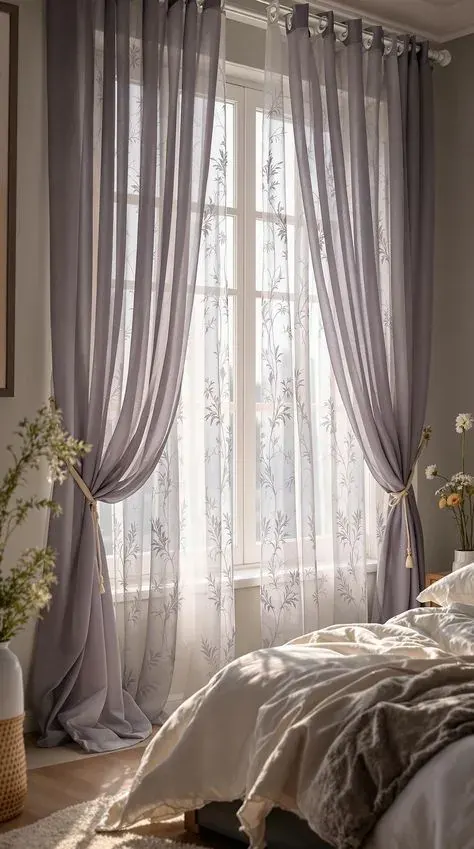
Drapery quotes look mysterious because the fabric is the only part a customer can see, and the fabric is often not the biggest number on the page. Yardage, construction, hardware and lead time move the price more than the pattern does. Once you know how yardage is calculated and what a pattern repeat costs you, a quote becomes a set of choices instead of a wall of numbers. Here is how it works for a Shelbyville home.
Pleat Styles and Fullness
Everything about a custom drapery panel gets locked in before the fabric is cut, starting with the pleat. Pinch pleat is what most people picture: a stiff buckram header, pleats tacked by hand, hanging on rings or a traverse track, formal enough to hold its shape for decades. A two finger version uses a little less fabric and falls softer, which fits a more relaxed Shelbyville room just fine. Goblet pleat is rounded and stuffed to hold its shape, gorgeous on a panel that never moves and rough on one you draw daily, since the shape gives out fast. Ripplefold skips pleats entirely, riding evenly spaced carriers on its own track, and it is what we reach for on a wide run of glass or anything that needs to be motorized.
Fullness is flat fabric width divided by how much rod width the panel ends up covering. Two times fullness on a 50 inch span means roughly 100 inches of fabric goes into that one panel before hems and returns. Most pleated drapery lands at 2 to 2.5 times, and anything under that starts looking pinched and thin. Ripplefold gets talked about in percentages instead, usually 80 or 100 percent.
What Custom Drapery Costs
Fabric is the only part of a drapery quote most people can see, which is why it confuses buyers. Yardage usually moves the number the most: multiply the width covered by the fullness ratio, add returns and hems, divide by the usable fabric width for the number of cuts, then multiply by the finished length. A pattern repeat adds to that yardage fast, and a bold repeat on a tall Shelbyville window can waste real fabric.
Nationally, custom drapery measured and installed runs roughly $250 to $2,600 a window, usually landing toward the top of that range since yardage and construction labor both run higher than on most shades. A pinch pleated panel with interlining and mitered hems takes real time to sew by hand. Hardware tends to be quoted as a separate line, so confirm whether it is even included. Ask every company for the same list: fullness ratio, pleat style, lining type, whether hardware is included, and lead time.
Lining Choices and Fabric Behavior
Unlined drapery is soft and lets real light through, but the face fabric fades faster with nothing between it and the sun. Standard lining, a sateen backing, gives the panel body and reduces and slows fading on the face fabric, though it never stops it outright.
Blackout lining stops light through the cloth itself, but light still slips around the panel unless overlap and returns are generous, and needle holes at the tacks can show as small points of light. Interlining adds a soft flannel layer between face and lining. It is the most expensive option, adding weight for a deeper fold and softening sound a little in a hard room. Linen moves with humidity, so a panel that brushed the floor in a damp month can drag in a dry one, which is why it usually gets floated rather than kissed. Velvet needs real hardware behind it, and sheers need more fullness than anything else to avoid looking thin.
Hardware, Stack Back and Floor Break
Stack back is the wall space fully open panels occupy. It increases with fullness, fabric weight, lining and pleat style. The standard fix: mount the rod wider than the opening and higher than the trim, so panels stack on wall rather than glass. A one way draw handles a wall without room on both sides.
The return wraps the panel back to the wall at the rod's end, so no light line shows down the outer edge. The overlap lets two panels cross in the middle for a gap free close. Brackets need framing or rated anchors, and long rods need a center support. Floor break has four standard options. Float, about half an inch up, suits daily use and homes with pets. Kiss, just touching the floor, requires a level floor to look right. Break, one to two inches of extra length, forgives an uneven floor. Puddle, three inches or more, works only on stationary panels. Measure the floor at multiple points along the rod, since Shelbyville houses, especially older ones, rarely run level across an entire window.
Choosing Drapery Room by Room
A shade blocks light at the glass. Drapery softens the sound in a room and gives a window a reason to look like part of the wall instead of a hole punched through it.
- Living rooms get the most value from drapery, mounted high and wide, often stationary, with a shade underneath doing the light control.
- Dining rooms can go formal, since the room gets used at night more than during the day and pinch or goblet pleats with interlining fit that mood.
- Primary bedrooms need drapery working, not decorating: a blackout lined panel closed over a room darkening shade, with real overlap and full returns, is what actually blocks the light.
- Home offices benefit from stationary panels beside a solar shade, taking the edge off both glare and the echo that comes with hard floors and video calls.
- Kitchens and bathrooms mostly skip full length panels in favor of something shorter and wipeable.
Across Shelbyville and IN communities, the drapery that looks effortless almost always started the same way: the rod went up higher and wider than felt necessary, and the fabric got chosen only after.
Hang the rod high and run it wide, then let a shade do the actual light control while the fabric handles the softening. That approach alone fixes most drapery problems in Shelbyville houses. Shelbyville Window Treatments will tell you when stationary panels are the smarter buy instead of selling you functioning drapery you do not need. Call (317) 999-5154 to walk your rooms, anywhere in Shelby County, IN.
Frequently Asked Questions
Why does a patterned fabric cost so much more?
Because of the repeat. Every panel has to be cut so the pattern lands in the same place, which turns the fabric between usable cuts into waste. The bigger the repeat, the more yardage you're paying for without ever hanging it on the window. On a tall window, a large repeat can add a noticeable amount of fabric to the order. Ask what the repeat measures before you fall for a fabric, and ask whether it can be railroaded, meaning turned sideways to avoid seams on a wide treatment.
How do I clean custom drapery?
Vacuum with a brush attachment on low suction a few times a year and most panels stay in good shape for a long time. When they need more than that, use dry cleaning or an in place cleaning service. Never put a lined panel through a home washing machine, since the face fabric and the lining shrink at different rates and the panel will never hang correctly again afterward. If a panel gets rumpled, a steamer used from the back usually settles the folds.
Should drapery panels actually draw, or is it fine to leave them stationary?
Depends on what the shade underneath is doing. If a shade or blind already handles the light and the privacy, stationary panels are usually the smarter buy, since they use less fullness and less hardware while giving you the same finished look on the wall. Functioning drapery makes more sense in a room with no shade at all, or in a primary bedroom, where the extra layer of fabric closing over a shade is what actually gets the room dark. Ask whether anyone will actually pull the panels shut on a normal night before paying for hardware that lets them do it.
 Why Standard Blinds Never Quite Fit a Sliding Glass Door
 Window Treatments for Tall and Oversized Windows in Shelbyville