Blackout or Room Darkening: Where to Spend the Extra Money
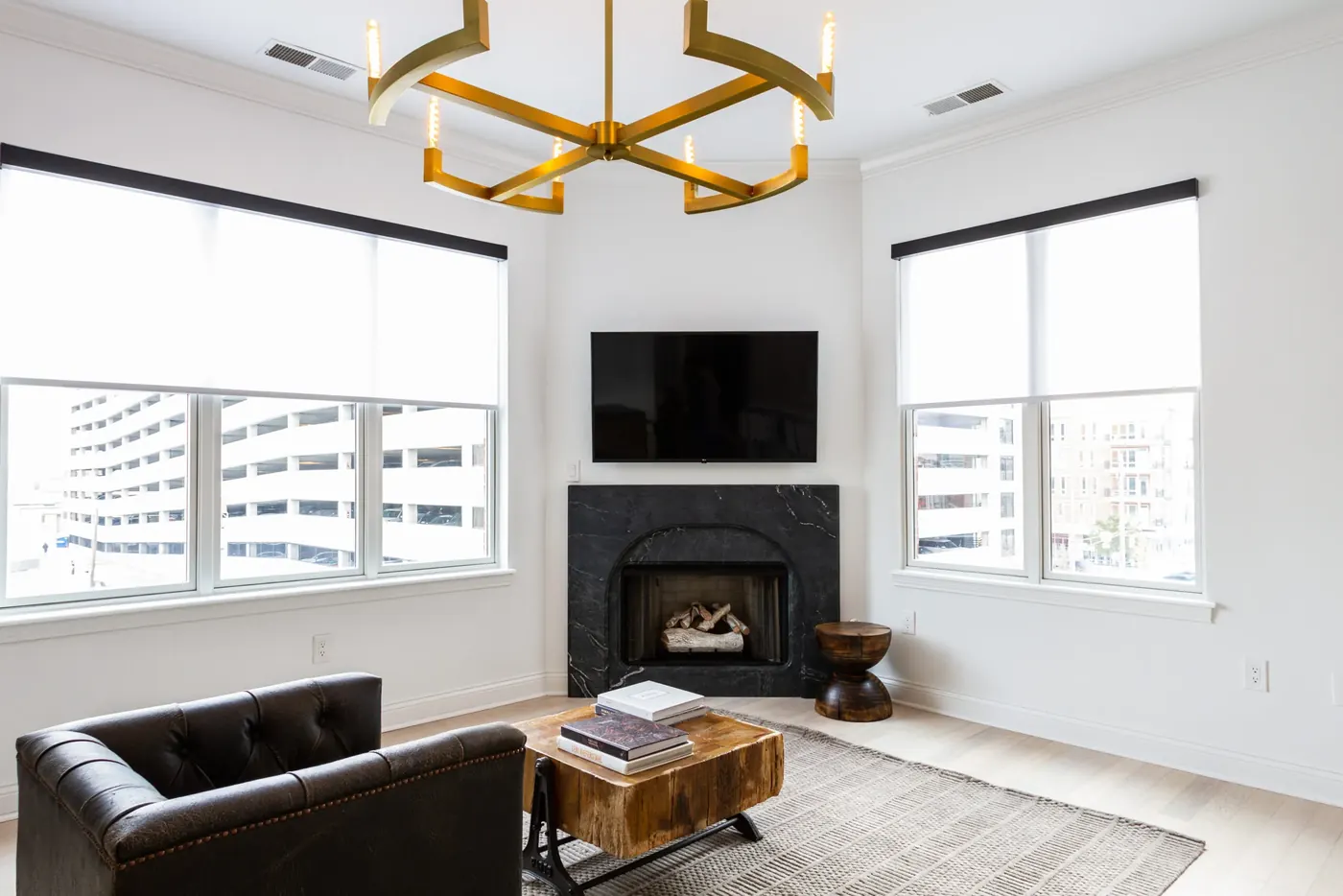
The words blackout and room darkening describe two genuinely different fabric constructions, not two marketing names for the same product, and the difference shows up in both performance and price.
What Blackout and Room Darkening Actually Mean
If better sleep is the reason you're looking at shades in the first place, it's worth understanding exactly what blackout and room darkening promise before picking one. Blackout fabric is engineered to block essentially all light passing directly through the material. Room darkening fabric blocks the large majority of it, typically in the 95 to 99 percent range, while letting a soft glow through.
That difference sounds small on paper and feels much bigger at 5am when the sun comes up. A room darkening shade in a west or east-facing bedroom will noticeably dim the room but won't erase that first hint of daylight the way a true blackout shade will.
The fabric spec is only part of the sleep equation, though. How the shade is mounted changes how much of that promised darkness you actually get once it's installed in your Shelbyville bedroom.
Price Difference Between Blackout and Room Darkening
As a general national range and not a quote for any specific window, room darkening cellular or roller shades commonly run $100 to $300 per window. Blackout versions of the same style typically run $130 to $380, roughly 15 to 25 percent more, because of the extra fabric lamination.
Across several rooms, that gap adds up quickly if blackout gets applied everywhere by default. A common budget approach is blackout in the primary bedroom and any media room, with room darkening covering the guest rooms and kids' rooms, plus the common living spaces.
Every number here is a general range, not a promise for your specific windows in Shelbyville. A free in-home measure will price out both fabric grades room by room, so the budget is based on real numbers instead of a percentage estimate.
A free in-home measure is a straightforward way to see both fabric options priced out for your actual rooms in Shelbyville or IN communities, rather than guessing at which ones are worth the upgrade.
How Much Light Gets Through, Realistically
Here's the part that catches people off guard: an inside-mounted shade in a Shelbyville home, blackout fabric or not, almost always leaves a thin gap along the sides and sometimes the bottom, because the shade has to be slightly narrower than the opening to operate without rubbing against the frame. That gap is usually a quarter inch to half inch per side, and light finds it.
Room darkening fabric blocks most light through the material but doesn't do anything about that edge gap, so a room darkening shade on an inside mount lets in both the small amount of light the fabric itself doesn't stop and the light sneaking around the edges. Blackout fabric closes the first source but not the second, so even a true blackout shade on an inside mount will show a thin line of light around the perimeter, especially at night with an outdoor light nearby.
Outside mount with a wider fabric overlap, or an outside mount with side channels that the shade slides into, cuts down on that edge light dramatically. If full darkness is the actual goal, the mount matters as much as the fabric grade, sometimes more.
How the Fabric and Construction Differ
Assuming blackout and room darkening cost the same and just picking whichever sounds better is a mistake worth avoiding, since the two are built differently and priced accordingly. Blackout fabric layers a face fabric over a foam or acrylic core and a backing, sometimes a fourth layer on top of that, which is what makes it fully opaque.
Room darkening fabric leaves out at least one of those layers, typically relying on a single foam-backed or napped liner. It's a lighter, less expensive product to manufacture, and that savings passes through to the price tag.
The heavier blackout construction changes how the shade behaves in small ways too. It rolls into a slightly larger cylinder at the top, which occasionally means a bigger cassette or valance is needed to hide it, and it holds a bit more heat and dampens more outside noise than a lighter room darkening fabric would.
Which Rooms Call for Which Option
In a Shelbyville home, fabric construction should follow room function, not the other way around. A primary bedroom, especially one facing west or used by a shift worker sleeping during the day, is where the full blackout construction earns its cost. A nursery is similar, though some households actually prefer the softer glow of room darkening for nighttime visits.
Living spaces used mostly during the day, like a kitchen or a dining room, generally don't need the heavier blackout build, and neither does a typical home office. Room darkening or an even lighter fabric keeps those rooms feeling open while still cutting glare and reducing UV exposure on furniture and flooring.
A media room or home theater is the other clear case for blackout, since the whole point of the room is controlling light precisely, on demand, regardless of what time of day it is outside.
Frequently Asked Questions
How much more does blackout cost than room darkening?
As a general national range, room darkening shades commonly run $100 to $300 per window, while blackout versions of the same style typically run $130 to $380, roughly 15 to 25 percent more because of the added fabric lamination.
Which rooms don't need blackout?
Kitchens and dining rooms rarely need it, and neither do most home offices, since blocking that much light during the day can make the space feel closed off. Room darkening or a lighter light-filtering fabric usually fits those rooms better.
Can I get blackout in a roman shade, not just a roller or cellular shade?
Yes, blackout linings are available across most shade styles, including roman shades. The lining sits behind the face fabric, so the outside of the shade still shows whatever pattern or texture you picked.
 Why Standard Blinds Never Quite Fit a Sliding Glass Door
 Window Treatments for Tall and Oversized Windows in Shelbyville
 Fabric and Color Mistakes We See in Shelbyville Homes